Faris’s JRPS Project
My JRPS topic is academic procrastination, specifically how adolescents can reduce it through environment-based strategies. I became interested in this topic during my junior year, when I realized that despite spending most of my life believing I never procrastinated, I had been doing it all along. What I once criticized in my peers had become part of my own routine and that uncomfortable realization pushed me to investigate why procrastination happens and how I can help people lessen it. My research question became: how can adolescents alter their avoidance behaviors like procrastinating on schoolwork with more productive study routines?
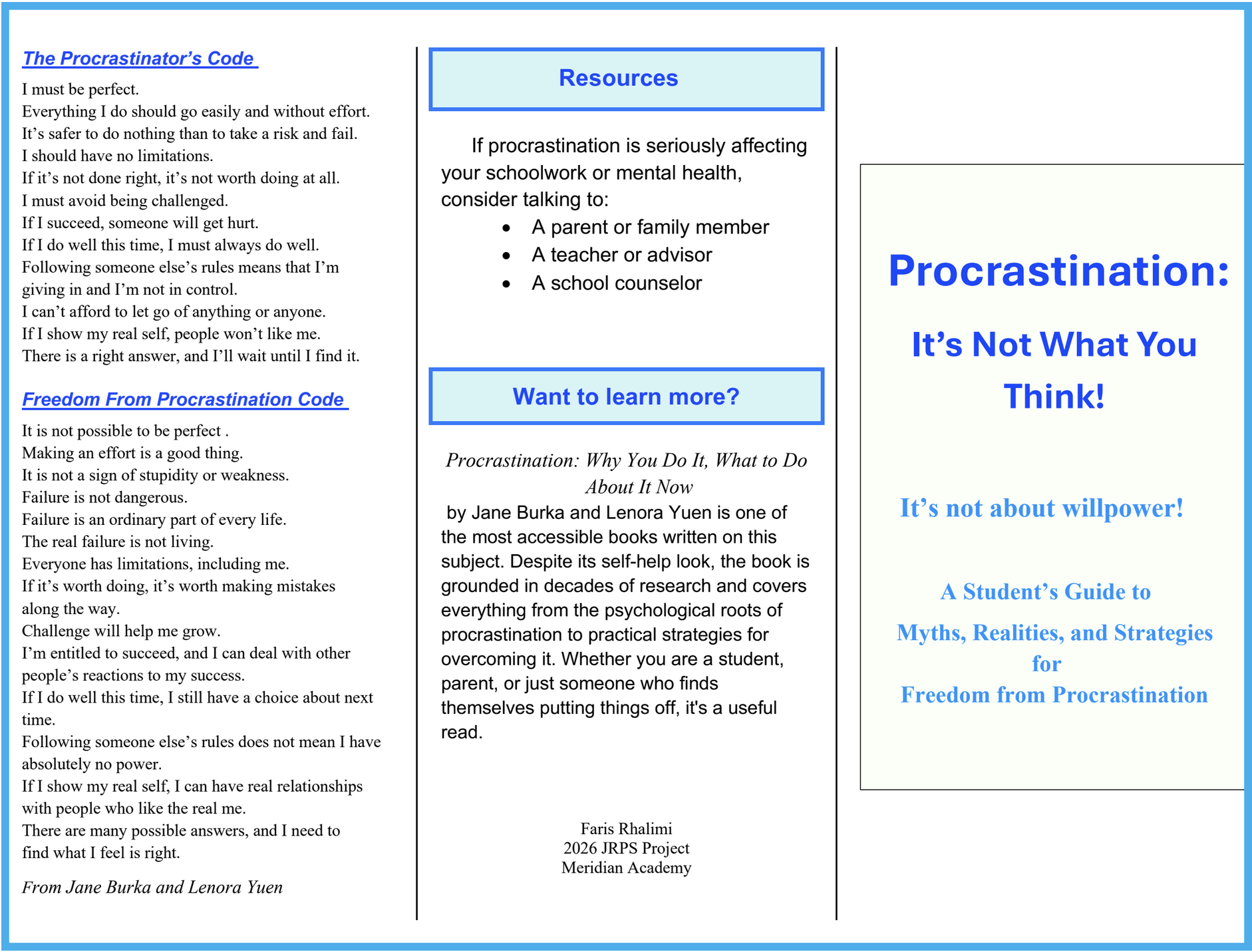
When I had to decide on a final project, I knew I wanted to do something that would take my research beyond a paper and actually apply to real students. I taught a class of fifth and sixth graders at Meridian covering environment-based strategies for reducing procrastination, drawing on Duckworth et al. 's research showing that changing your surroundings is far more effective than relying on willpower. I collected data through pre and post assessment surveys and homework timeliness scores to track any changes in students’ focus and homework habits. I also created a brochure breaking down the myths and realities of procrastination in language accessible to students, parents, and educators, which is available on the Meridian website. I chose this combination because I wanted my project to be both grounded in research and genuinely useful to the people who came across it.
This process taught me a lot: how to work through dense academic literature, how to conduct a professional interview, and how to design and run a real research-based intervention. On a more personal level, it completely changed how I understand my own behavior and the behavior of people around me. Procrastination is far more complicated than I ever gave it credit for, that realization alone made this one of the most valuable things I have done at Meridian.